My dad liked to tell funny stories--nothing ever dirty or even much off-color (at least not in the presence of his three pure and innocent sons). I have no idea where he got them--certainly not on the Internet, which Al Gore had not yet invented. Dad, in fact, never did go online. Although he lived until 1999 and could have surfed and emailed, he expressed no interest in it whatsoever whenever my brothers and I would suggest he might like it. In fact, he was pretty much a non-technological guy. A bit of a genial Luddite. Never used a computer. Was bewildered by his own stereo system. The microwave baffled him. Never used an ATM. He did use the TV remote, a device he considered among the greatest inventions of the human imagination.
I remember one of Dad's stories--which has some relevance today. Here goes ...
Into a remote town in the mountains ran a frightened man, crying aloud, "The viper is coming! The viper is coming!" People were worried. A bit later, a woman came running into town, crying, "The viper is coming! The viper is coming!" People were frightened.
A third person ran into town, screaming, "The viper is coming! The viper is coming!" People were panicking, scattering, terrified.
A weary old man with a bucket walked into town. People slowly gathered around. "I'm the viper," he said. "I've come to vipe the vindows."
Well, the viper is at our house today. We've not cleaned the windows (do not be horrified; do not think less of us; do not gag) since we moved here in 1997. But we noticed the other day that they were no longer transparent; they looked, in fact, a bit like the colored gels I used to slide into the fresnels above the Harmon School stage.
And so ... the viper is here today viping the vindows, and we can see the falling leaves with much greater clarity. And only one question remains: Who will rake them?
Dawn Reader
from Open Door Coffee Co.; Hudson, OH; Oct. 26, 2016
Sunday, October 7, 2012
Saturday, October 6, 2012
Just Another Friday; or, A Hot Time in the Old Town Tonight
We often go to movies on Friday night, but last night the mood was not there--so we headed out on what has become one of our occasional, even customary, Friday (or sometimes Saturday) no-movie-tonight jaunts.
We headed down Norton Road, which cuts along the southern edge of Hudson, under new Rte. 8, across old Rte. 8, and down into the Cuyahoga Valley National Park. We almost always see deer on that road, once we cross both 8's, an experience that combines fundamental wonder with a soupcon of fear (Good thing we saw that one in time!). Last night, a young doe stood in the road regarding us, her look conveying the obvious: What are you doing here in that machine in my house! We slowed; she turned and executed a lovely, effortless leap into the woods, where she disappeared like a dream.
At the bottom of the hill, we turn left on Akron-Peninsula Road, going as slowly as following traffic will permit. Last night--a cloudy, drippy, gloomy gloaming--there was none, so we coasted more than drove alongside the Cuyahoga River, surprised by how bright the leaves could be even in the absence of much support from the sun. Once again I was startled by a goat that isn't a goat, just a black two-dimensional silhouette/sculpture some folks have installed beside their mailbox. Every time--every single time--we pass it, I slow, thinking I'm about to hit an animal ... (What's that line about Old Dogs and New Tricks?)
We turned right on Bolanz Road, a short connecting route to Riverview Road--and Szalay's Farm, where, last evening, we stopped in the rain and bought some corn and lettuce and peaches. As I was going through the corn on the wagon--fresh-picked (all the ears were wet)--I jokingly asked one of the farmhands who were sorting there, Got any dry ears? He looked at me quickly (Is this guy all there?), saw I was just being a jerk, and laughed enough to let me know he didn't really think it was all that funny. He said, You know--that's not the craziest thing I've heard here. One day a guy complained that the kernels were too shiny. I agreed: That is a bit daft.
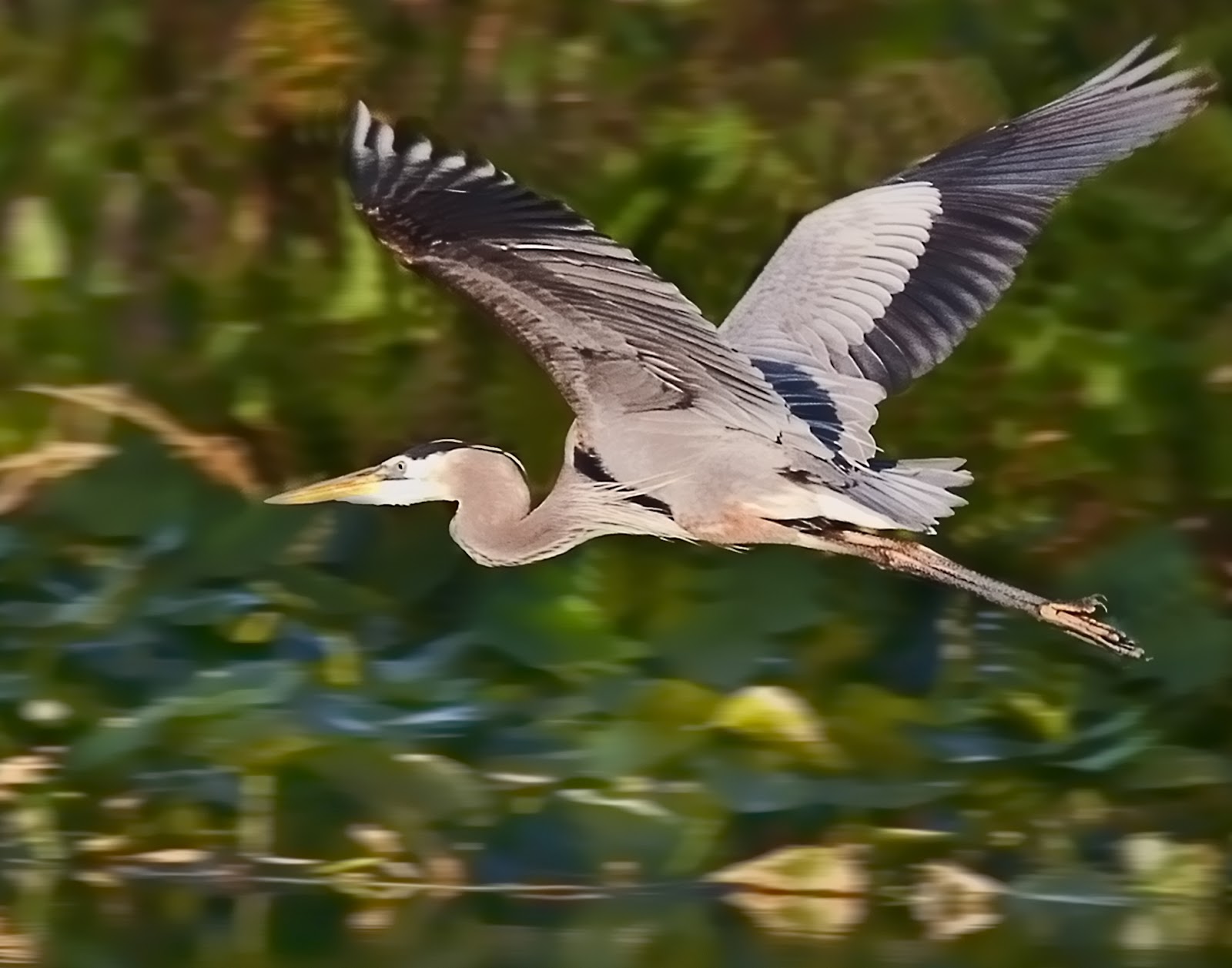
Back in the car, we turned left on Riverview and drifted, now on the west side of the river, toward Bath Road, where, in the early spring, we like to park and watch the blue herons building their nests--always a wonder: How can such a weird assembly of legs and wings and body ever get itself aloft? And how, once it does so, can it move me so entirely?
Our grandson Logan adores blue herons, so we feel an even stronger affinity for the bird.
Along the way, we cross Ira Road, which leads to Old Trail School, where I very nearly taught in the 1981-1982 school year (but that's another story).
The herons are gone now, though, so we turned right on Bath and drove up out of the Valley. Next, we turned left on North Revere Road, climbed some more to Smith Road. And civilization.
We pulled into Summit Mall and walked down to the little Starbucks, where I sat and read a Henning Mankell novel on Kindle while Joyce went off in search of something Pendleton (no luck). While sipping my grande decaf Americano, I also worked on finishing the memorization of Robert Browning's "My Last Duchess," a poem I first read in English 101 (Freshman English) at Hiram College in the summer of 1962. (Link: "My Last Duchess") When Joyce returned from her (failed) mission, I recited it for her the first time. She held the text, corrected me a few times. (The story of our marriage?)
Then--off we went to West Market Plaza. I sat in Panera and read some more and tried to eradicate the errors I'd made in "Duchess." And did so (but for how long?). Joyce was reconnoitering in TJ Maxx (no Pendleton there, either, alas). When she came back, we shared a bottle of water; I watched her eat a blueberry scone (and wanted with all my heart to eat it all myself!).
Scone and water gone, we drove down to Barnes & Noble, the last sizable, sort-of-real book store near us. (A confession: I like to look on the dust jackets and paperback covers to see if any of my reviews from Kirkus or the Plain Dealer have made an appearance; sometimes they have.) We stayed awhile and very nearly bought a few things, then didn't. (We keep telling ourselves it's time to downsize but somehow never manage to get to the down part.)
We headed out onto I-77 North, the slow way home. It's a way that takes us through Akron, where Joyce was born and grew up. I cannot drive through that city without feeling a surge of gratitude for my good fortune in finding her, in fooling her sufficiently that we got to the altar before she knew me very well. Whew!
Back home we decided to watch via DVR the third installment of Wallander. Microwave popcorn (plain--no butter, no salt). Cold club soda. Kenneth Branagh looking grumpy and grungy and breaking our hearts.
I was puzzled, though, watching. I have read all the Wallander novels now but did not recognize this one. Later, I checked: Before the Frost was actually the first of a series (I hope) of novels about Linda Wallander, the detective's daughter, who also joins the police force. I've now ordered that book on Kindle because I'm sure it's quite different: In the film we watched, Kurt Wallander took the lead in all ...
And then it was after eleven. Bedtime.
Friday, October 5, 2012
13
I'm not a superstitious person, not since childhood, anyway, when I really did kind of think that if I stepped on a crack I would break my mother's back. It seemed kind of a harsh thing for fate to do--cripple my mother for a careless step of mine--but of course it also has enormous metaphorical significance, doesn't it? My carelessness--my inattention--can indeed harm others, even those--especially those--I love the most.
In my baseball-playing years I tended to adopt some of the, uh, habits (not superstitions!) of other players. When I was hitting, I always prepared exactly the same way before each pitch. Bent down near the plate, grabbed the (approximately) same amount of dirt to rub on my hands, took the same number of practice swings ... that sort of thing. I was like that in basketball, too, at the foul line. Same number of dribbles before the shot. Just habit, you know--not superstition.
As I've grown older, though, my superstitions have gradually flaked away (I'm less flaky now!), though, as I've written before, I remain a creature of routine, and routines, I think, are one way that I employ to pretend that I am in charge, not the universe, not mortality. If I keep doing the things I've always done--and at the same time on the same day--well, frankly, I won't die. It's quite simple.
But one stupid superstition remains, one that I don't even think held all that much sway when I was a kid. The number 13.
When you're really wacky about 13, there's a word for your condition--triskaidekaphobia. Fear of the number 13. (There's a nice website, by the way, that lists all the phobias: Phobia List--there's even a fear of books: bibliophobia, a condition afflicting numbers of my students over the years!)
I am not--not, I emphasize--a triskaidekaphobe. But still ... Just now, for example, I was reheating some Starbucks I'd bought last night. I set the microwave on the usual setting: 1:30. I putzed around in the kitchen a few moments, then looked at the timer: 13 seconds! Damn! What does that mean? In a rational world, I knew, it meant this: Nothing whatsoever. But in my world ... it must mean something, right? I mean, there was only a 1/90 chance that I would glance at the timer at that moment!
(And I just realized, re-reading the paragraph above that 1:30 is NOT good--there's a 13 in it! From now one: coffee reheating is 1:29!)
There's more: A good setting for a couple of microwaved potatoes is thirteen minutes. I set our timer for 12:59. No kidding. And when the microwave (or oven--or any other) timer is counting down, I look away when it nears 13.
When I'm riding the exercise bike out at the health club, I do not look at the timer the entire minute it's between 13:59 and 13:00. I avoid--with a passion I feel for hardly any other routine--looking at that timer when I think it may read :13 after any of the other minutes in its cycle--e.g., 6:13, 5:13, etc.
What the hell is this all about?
I found an article on Yahoo that purports to explain it all: 10 Reasons People Fear 13 (Thank God it's not 13 reasons!) Some of the reasons go back to the Bible and earlier. I particularly like this one: A perfect coven consists of 13 witches. That's something I've never really thought much about, the optimal size for a coven. But, looking over the list, I can't say there's a single one of the ten reasons that has anything to do with my, uh, concern about the number.
I think, maybe, that it's just a kind of symbol of human impotence. We like to think we're in control. We're not. In our genes are time-bombs, ticking away. Accidents are out there, waiting for us to appear. Randomness rules despite our ferocious and feckless attempts to behave as if it's otherwise.
I don't like to think of myself like this. I like to think of myself as rational, scientific, prudent, skeptical. In charge. I'm also serenely contemptuous and dismissive of the superstitions of other people (such puerile nonsense!). I don't avoid black cats; I walk boldly under leaning ladders; I jump up and down on sidewalk cracks; I sneeze in cemeteries; I don't give a damn if I break a mirror; and ...
Okay, I do eat an apple a day, and I knock on wood ... and that pisses me off, too.
Thursday, October 4, 2012
A Ferry Nice Time
| Miller Ferry Dock 3 October 2012 |
Yesterday, we rode the ferry to Put-in-Bay (aka South Bass Island). From Miller Ferry Dock at Port Clinton. I haven't been out to the islands in a half-century. The last time involved a high school girlfriend, a broken heart, some adolescent behavior, and gloomy thoughts as the ferry chugged me and my broken heart back to Port Clinton, alone, on a very grey day that was absolutely perfect for my mood. I wouldn't have minded if the Lake Erie Monster had leapt up out of the water, snapped me in his jaws, and carried me down to Monster Land, where I would become a between-meal snack for the Baby Monsters, who would battle like, well, like siblings to see who would get to eat my bloody broken heart, the choicest piece of me ... and so on.
This time, however, the sun peeked through now and then, and my heart, healed in 1969 when I met you-know-who, was pumping merrily away with only happy thoughts--and expectations. We were heading to the island to see some rites related to abolitionist John Brown, whose son, John Brown, Jr., came here after Harpers Ferry--and stayed the rest of his life. (His grave is here--alongside some of other family members; yes, we saw them.)
![]() |
| John Brown farm North Elba, NY |
But most of this is her story, so I will shut up about it.
Mostly, we've wandered around the very empty island (a Thursday in October is not a Big Time for Tourists) and have enjoyed the solitude, the conversations about Brown, about contemporary politics, about the wonder--and gratitude--we feel for this opportunity to pursue a passion. And to be together while doing so.
![]() |
| Cather cottage Grand Manan Island |
And now to Put-in-Bay, where we chased John Brown, ate some of the toughest chicken that's ever challenged my teeth (had these birds been on the Olympic Chicken Team? they must have been working out!), roamed around in the soft sun and softer island breeze, and enjoyed, once again, the thrill of pursuing somethings that's racing through our minds.
And this afternoon--back on the ferry, back toward home, which, in the most meaningful sense of all, we have never left at all.
Wednesday, October 3, 2012
The Goddess of Earthsea, Part III
![]() |
| Ursula K. Le Guin |
When I returned to teach at Western Reserve Academy (2001-2002 school year), I tried to keep it up but had a hard time: I was teaching a full load, had two daily preparations (courses I'd never taught before), had other duties associated with boarding schools (meals, dormitory duty, committees, etc.). And so ... my journal-keeping suffered. And when I looked yesterday to see what I'd written about the teleconference my students had with Ursula K. Le Guin, I found ... nothing. I'd not written anything at all for the entire month of May.
And so ... I proceeded to hate myself for a day, more or less.
But I do have some memories, and I do have some documents related to that day, 22 May 2002, so here goes ...
As I wrote yesterday, all WRA seniors had read and written about Le Guin's sci-fi allegorical novel The Dispossessed, and the other teachers and I had every student submit five questions. The Senior Seminar chair and I then went through them all and picked kids who we thought had been especially thoughtful--and their questions became the ones we would use to initiate the conversation with Le Guin.
Almost all the questions were thoughtful--Do you believe in the idea that without decentralization there really is no true personal freedom? If you had to live on [either of the two planets], which would you choose? Is there a difference between a "good" war and a "bad war?
There were also some perfunctory, cliched clunkers--How did you ... incorporate your life experiences into the book? When you were a child, what was your favorite book? That sort of thing.
We decided, too, that we would pick eighteen students--a random drawing--to participate in the discussion--three from each of the six sections of the course. But we also asked students to withdraw ahead of time if they really didn't want to do it. A few did.
And so we all assembled that afternoon in a conference room in Hayden Hall on the campus. The phone hook-up was ready. And at the agreed time, I phoned the number Le Guin had given me.
She answered almost immediately (was it the first ring? I think so!), and I was immediately struck by how gracious and personable she was. Laughing at herself. Confessing to slips in the book. Asking the kids questions about their reactions to things. She was wonderful with the students--never argumentative (even when a couple of them tried to be) but genial and humorous and understanding all the way.
The other teachers and I, per agreement, stayed completely out of the conversation.
The kids clapped for her when it was time to end ...
We exchanged another letter or so. On 25 May, I wrote and said: "All the students were so impressed with your intelligence, your humor, your warm, self-effacing manner, and I could tell as I watched them that they realized they were involved in something quite special." My letter indicates we sent her a gift. I cannot for the life of me remember what it was.
And so I'm hating myself again, right now.
But I was so excited about what had happened that day (not excited enough to write about it in my damn journal, though!) that I arranged in each of my subsequent years at WRA to bring a writer to campus, a writer whose work our students had read. In 2003, novelist Lee Smith, whose The Last Girls (with many connections to Huck Finn) our students had read, also spoke to our students via phone hook-up. (I just checked my journal: I did write about that chat! Lesson learned!). But after Smith--all the writers came to our campus. I'll write about their visits one of these days.
Meanwhile, I'll remember the first, Ursula K. Le Guin, with much fondness. And, every time I think about my journal, I'll hate myself ...
Tuesday, October 2, 2012
The Goddess of Earthsea, Part II
![]() |
| Ursula K. Le Guin |
As I wrote yesterday, I was talking about and encouraging my seventh graders to read the Earthsea Trilogy when I resigned from the Aurora City Schools in the spring of 1978 and headed off to Chicagoland, where I thought I would remain forever at Lake Forest College, happily heading the Department of Education.
But by October that first fall, I knew I'd made a mistake. I liked the college (reminded me of my own Hiram College) and my colleagues and my students, but I did not care for administration, and I missed teaching middle schoolers. Perhaps one sure sign: I assigned A Wizard of Earthsea to my Lake Forest students so that they could see its relevance to the whole coming-of-age thing they would be dealing with in their own classrooms. Oddly (?), they resisted that book, appearing to think that it was "beneath" them as sophisticated college students.
They were wrong.
Between 1979 (when I began teaching at Western Reserve Academy) and the fall of 2001 (when I returned to WRA after my Aurora retirement) I had no real opportunity to teach the Earthsea books. In a way, I guess, I had "moved on" from fantasy fiction--not in any way because I felt it was "inferior," but because my interests had shifted. And I tend to follow my interests, wherever they take me.
But that first fall, back at WRA, I got a surprise. One of my assignments that year was teaching a section of what the school then called "Senior Seminar," a culminating course for all seniors that used to be called "Future Roots" and is now called something else. The seniors read texts in common (no matter whose section they were in)--from Plato to Nietzsche to Martin Luther King, Jr.--wrote papers on similar topics and produced a major research paper in the winter.
In the spring, they all read a "lighter" work in common--and in the spring of 2002 it was a novel by Ursula K. Le Guin, The Dispossessed. I had not read much of Le Guin's sci-fi before that novel, but I did, of course, know a bit about her and so had a good background for this novel about two proximate planets of very different character and political structure. (Gee, I wonder what Le Guin was getting at?)
I see in my copy of the book that I underlined the text heavily and showed my customary astuteness when I wrote in the margin the word "Darwin" next to this comment by a character: "The law of existence is struggle--competition--elimination of the weak--a ruthless war for survival" (143). Hey, you can't slip Darwin by me!
Anyway, the students seemed to like the book--our discussions were pretty animated. And I was already excited about the realization of an idea I'd had back in the fall: Why not invite Le Guin to campus?
I could not find her on the Internet (later, I learned, she--this sci-fi writer--was not yet online!), so I used Contemporary Authors and learned who her agent was and in late September I wrote asking about arranging a visit.
She wrote back and suggested a phone conference. And she noted that she rented a cottage in Cannon Beach very near the place where I had recently scattered my father's ashes.
BTW--All of this was pre-Skype. Too bad.
With some more letters we established a date: 23 May 2002, 2 P.M. (our time). The other Senior Sem teachers and I picked eighteen students to participate (more about that later), all of whom would surround a table with some speakers in the center. And speak directly with the author of the book they'd just read ...
TOMORROW: that phone conference with Ursula K. Le Guin
Monday, October 1, 2012
The Goddess of Earthsea, Part I
![]() |
| Earthsea |
Writer's Almanac today posted this poem by Ursula K. Le Guin--and got me to thinking about her.
Science
by Ursula Le Guin
What little we have ever understood
is like an offering we make beside the sea.
It is pure worship when pursued
as its own end, to find out. Mystery,
the undiminishable silent flood,
stretches on out from where we pray
round the clear altar flame. The god
accepts the sacrifice and turns away.
"Science" by Ursula K. Le Guin, from Finding My Elegy: New and Selected Poems 1960-2010. © Houghton Mifflin Harcourt, 2012.
I'm not sure when I first was aware of her work, but, based on some notes in some books, I think it was the fall of 1977. I was teaching seventh graders then at Harmon Middle School in Aurora, Ohio. I had recently received my Ph.D. from Kent State University and was inflated (bloated?) with self importance--so much so that I'd recently altered the name on my bank checks to read "Dr. Daniel Dyer"--a title that tended to puzzle more than impress. My middle schoolers were never really impressed, actually. Once they found out I was not the kind of doctor who could set a bone or even help a horse, I could see the wonder die in their eyes, replaced by a sort of bemusement about a world that could confer upon people doctorates that were useless.
I did not know, teaching that fall, that the school year 1977-1978 would be a momentous one for me--and for the Aurora Schools. In the spring of 1978, the Aurora teachers (I among them) would go on a protracted strike. In May my dear grandmother would die in Columbia, Missouri. While I was attending the funeral, Aurora settled its strike, and I returned to a district much changed. The strike had cost me a play production I'd been working on for over a year--Billy the Kid, an original script I'd written with some wonderful Aurora youngsters. (I would get to do it later, though.) And in May 1978 I would resign from the Aurora City Schools and join the faculty of Lake Forest College in Illinois, a position I kept only a single year. I spent the next four years trying to get back to Aurora, which I eventually did in the fall of 1982.
For some years I had been teaching fantasy stories to my seventh graders. We learned about The Hobbit and The Lord of the Rings, Lloyd Alexander's The Chronicles of Prydain; I took a busload to see The Sword in the Stone at the old Kent movie theater downtown; the kids wrote their own fantasy tales based on maps they'd drawn.
A weird Alexander moment. Around this same time I attended a meeting of the National Council of Teachers of English in Philadelphia. One of the featured speakers was Lloyd Alexander. I was full in the thrall of his Prydain books (many of my students read them, too), and while he was speaking, I stood in the back of the room with a telephoto lens on my camera and took, oh, 70,000 shots of him while he was talking. (No flash--I wasn't that crude!) After about 65,000 or so, he glanced my way with a look of total confusion on his face--well, maybe it was petulance, annoyance. Who can say? So I took only about 5,000 more. As I write this, I remember the time Tobias Wolff visited one of my classes at Western Reserve Academy and became so annoyed with the (busy) school photographer that he stopped the class and asked for no more pictures.
BTW: I cannot find a single one of those 70,000 Alexander shots ...
And then--somehow--here came Le Guin. I loved A Wizard of Earthsea (1968) and immediately charged through the remainder of the trilogy--The Tombs of Atuan (I read it in November 1977, the month I would turn 33) and The Farthest Shore (I read it the same month). I cannot find the first volume, though--perhaps it died of over-use, all those times I read it and let students borrow it.
Le Guin said some lovely things in these novels about a young man, Ged, who gradually discovers his wizardly powers. (Hmmmm ... a series of stories about a boy wizard? Something like that could never catch on!) How about this from The Farthest Shore ...
For in this love he now felt there was compassion: without which love is untempered, and is not whole, and does not last (86).
Works for me.
I've often wondered how Le Guin (born 1929, still writing) has felt about the Harry Potter phenomenon--seeing someone else find a vast vein of gold inside a mine you first dug ... ? (Lloyd Alexander's books were also about a boy-wizard ... is he gnashing his teeth somewhere, too?)
I'm guessing Le Guin merely smiled and kept writing.
BTW: Just checked ABE Books--a 1st printing of Wizard, signed, is only $4500. My birthday's in November; Christmas is not long after ... ?
TOMORROW: Le Guin's other writing--and her visit (sort of) to Western Reserve Academy, spring 2002.
is like an offering we make beside the sea.
It is pure worship when pursued
as its own end, to find out. Mystery,
the undiminishable silent flood,
stretches on out from where we pray
round the clear altar flame. The god
accepts the sacrifice and turns away.
"Science" by Ursula K. Le Guin, from Finding My Elegy: New and Selected Poems 1960-2010. © Houghton Mifflin Harcourt, 2012.
I'm not sure when I first was aware of her work, but, based on some notes in some books, I think it was the fall of 1977. I was teaching seventh graders then at Harmon Middle School in Aurora, Ohio. I had recently received my Ph.D. from Kent State University and was inflated (bloated?) with self importance--so much so that I'd recently altered the name on my bank checks to read "Dr. Daniel Dyer"--a title that tended to puzzle more than impress. My middle schoolers were never really impressed, actually. Once they found out I was not the kind of doctor who could set a bone or even help a horse, I could see the wonder die in their eyes, replaced by a sort of bemusement about a world that could confer upon people doctorates that were useless.
I did not know, teaching that fall, that the school year 1977-1978 would be a momentous one for me--and for the Aurora Schools. In the spring of 1978, the Aurora teachers (I among them) would go on a protracted strike. In May my dear grandmother would die in Columbia, Missouri. While I was attending the funeral, Aurora settled its strike, and I returned to a district much changed. The strike had cost me a play production I'd been working on for over a year--Billy the Kid, an original script I'd written with some wonderful Aurora youngsters. (I would get to do it later, though.) And in May 1978 I would resign from the Aurora City Schools and join the faculty of Lake Forest College in Illinois, a position I kept only a single year. I spent the next four years trying to get back to Aurora, which I eventually did in the fall of 1982.
For some years I had been teaching fantasy stories to my seventh graders. We learned about The Hobbit and The Lord of the Rings, Lloyd Alexander's The Chronicles of Prydain; I took a busload to see The Sword in the Stone at the old Kent movie theater downtown; the kids wrote their own fantasy tales based on maps they'd drawn.
![]() |
| Lloyd Alexander |
BTW: I cannot find a single one of those 70,000 Alexander shots ...
And then--somehow--here came Le Guin. I loved A Wizard of Earthsea (1968) and immediately charged through the remainder of the trilogy--The Tombs of Atuan (I read it in November 1977, the month I would turn 33) and The Farthest Shore (I read it the same month). I cannot find the first volume, though--perhaps it died of over-use, all those times I read it and let students borrow it.
Le Guin said some lovely things in these novels about a young man, Ged, who gradually discovers his wizardly powers. (Hmmmm ... a series of stories about a boy wizard? Something like that could never catch on!) How about this from The Farthest Shore ...
For in this love he now felt there was compassion: without which love is untempered, and is not whole, and does not last (86).
Works for me.
I've often wondered how Le Guin (born 1929, still writing) has felt about the Harry Potter phenomenon--seeing someone else find a vast vein of gold inside a mine you first dug ... ? (Lloyd Alexander's books were also about a boy-wizard ... is he gnashing his teeth somewhere, too?)
I'm guessing Le Guin merely smiled and kept writing.
BTW: Just checked ABE Books--a 1st printing of Wizard, signed, is only $4500. My birthday's in November; Christmas is not long after ... ?
TOMORROW: Le Guin's other writing--and her visit (sort of) to Western Reserve Academy, spring 2002.
![]() |
| Ursula K. Le Guin |
Subscribe to:
Posts (Atom)