Dawn Reader

Dawn Reader
from Open Door Coffee Co.; Hudson, OH; Oct. 26, 2016

Tuesday, January 14, 2014

Nine Years with the Enemy

It was almost exactly nine years ago--on January 17, 2005--that my life changed. It was on that day that my urologist (who shall remained anonymous) called with the results of a biopsy I'd had on January 11: a small lump on my prostate gland discovered during my routine physical a few weeks earlier.

January 17, 2005, had been a fairly normal day. I was teaching then, part-time, at Western Reserve Academy, just about two blocks from our home (I walked or biked to school just about every day; only lightning storms or an after-school appointment put me in a car). I was teaching English to juniors--American literature + Hamlet. I had three sections, and I was having a great time. Here's what I wrote in my journal for that January day (somewhat edited);

17th, Mon: [rose at] 5:25 a.m.; yesterday—read Joyce’s wonderful essay about living next to a funeral home; read a Trollope chap., then watched the end of Masterpiece Theater’s production of He Knew He Was Right—pretty good job, considering they had only 3 hrs.; this a.m.—walked up to school on bitterly cold day; prepped and taught 1st class; walked to Saywell’s [now-defunct coffee shop/drug store]; chatted with Joyce and graded quizzes and began new book for PD; walked back up; taught class; went to MLK, Jr., assembly, where they sang an arrangement by Bill Appling of an old spiritual (“We Will Walk …”); walked home; quick lunch with Joyce; fussed with computer, then worked on quizzes and PD book … chatted more with Joyce, then headed back up about 1:30 … taught class; stayed afterwards to grade papers/record grades/put grade-slips in kids’ mailboxes; walked home; drove with Joyce to Caribou for chat and reading (finished quota for PD book); drove home for supper (shoveled walk first); afterwards—worked on “Brad and Jenn” poem … headed with Joyce out to OfficeMax, where I got a 512 Jump Drive, then to Starbucks for drinks; drove home very slowly in the snow and ice and cold; we’d not been in the house long before Dr. X called: I do have prostate cancer.  He was very nice—said it was in an early stage, said it is a slow-growing cancer … still.  I was very surprised: I’ve felt nothing wrong, really.  No symptoms.  His office will call me tomorrow re: an appointment to talk over things.  I was more dazed than scared, at least at first.  Walked upstairs and told Joyce, who reacted as a lover does.  She called Steve (I was able to talk with him only a little bit); tried my brothers but got only voice-mail and  decided not to do that; called Mom and chatted with her.  She was actually pretty decent about it.  Downstairs: fussed with computer; e-mailed [a school administrator] to let him know what’s happening … though I’m not really sure what is happening ….  Upstairs about 9 to read a little, I guess …

That urologist, by the way, was wrong about the biopsy. As the post-surgical pathology report revealed, it was not a "slow-growing" cancer; it was a very aggressive one that I've had to battle for nearly nine years now. I say "battle," but it's not really much of a battle. I try to eat right, exercise, rest; I neither smoke nor drink. But the cancer has kept growing despite the surgery in 2005 to remove my prostate gland, despite the thirty-five radiation treatments I had in January 2009. I can't really do much else.

When my PSA began rising again in recent months, signaling the cancer's return, I switched from the Cleveland Clinic (they'd failed twice to get it; time to let someone else fail) to University Hospitals. In late July 2012, my UH oncologist put me on hormone deprivation therapy (the drug is Lupron), and my PSA (Prostate Specific Antigen), which had risen to 22.9 (it should be zero: I have no prostate gland), fell to zero. Lupron, as many of you know, is not a cure; it fools the cancer ... for a while. Puts it in remission.

I go to UH every three months now for another PSA check--and shot. I will be on Lupron for the rest of my life. My most recent visit was yesterday (January 13), and my PSA remains undetectable. When (not If ... When) my PSA starts rising again, it will be time for other therapies--chemo, one of them, will follow some others. And my "quality of life" will diminish yet another step. Eventually, like most everyone else, I will reach that borderline between "living" and "breathing." Until then, I plan to do a lot of both.

Next time: The ways my life has changed since January 17, 2005.

Monday, January 13, 2014

The Papers of Victoria Frankenstein, Part II: 42


I sat for a while, thinking about these questions, then decided to go talk to Gil about them. Well … maybe not the last two, but certainly the others.
I stood, loaded up my backpack, returned the items to Mrs. Bishop, and walked into the microform area once again. This time, I knocked on the door frame so that I wouldn’t scare him—he seemed pretty jumpy to me, and I didn’t want to scare him twice, not on the same evening, anyway.
“You again?” he said when he turned and saw me.
“Yep,” I said, slipping into a seat at the table beside his machine. “I’m like a deadly virus.”
He smiled thinly.
“I bet you’ve been wondering,” he said, “about my research on your house.”
I just looked at him. How did he—?
“That must have seemed pretty creepy to you,” he went on, “finding some strange kid doing research on your house.”
“You are a strange kid,” I said. “No doubt about it.”
“Well, I didn’t know you lived there,” he said, “not when I began this. I had just, you know, driven by your house … and heard about the tornado last spring … heard how yours was the only house that was really damaged very much … was interested that your dad wanted to restore it exactly the way it was …”
“That’s Father for you,” I said. “He likes things to be the way they were, not the way they are … or the way they could be.” I thought a moment. “And I guess I’m kind of like that, too.”
“Me, too,” Gil said softly.
“You probably know,” he went on, “that your house was not always a private home?”
“Oh sure,” I lied. I didn’t know much of its history at all.
“It was an inn for a while,” he said, “when the stagecoaches came through Franconia.”
“Yeah.”
“And then a rooming house after that.”
“Un huh.” I was trying to sound as if I knew everything he was saying.
“There was even talk of making it the library,” he said, “before they decided to build this building.”
“I didn’t know that,” I said. “I can use that in my report, too.”
“You must feel weird about that house,” Gil continued. “I mean, about why it was originally built.”
“Not really,” I said, not knowing why it was originally built.
“I mean, doesn’t it make you feel creepy?”
“Not really.”
“And you don’t ever hear any strange sounds?”
“What are you talking about, Gil? Strange sounds? The only strange sounds I’ve ever heard there are the ones you make when you’re on the telephone.”
“Well, you’re braver than I am, then,” he said. “I mean, I don’t know how I’d feel, living in an undertaker’s house.”
“An undertaker’s!” I exploded.
“Sure,” said Gil with surprise. “Didn’t you know?”
“No! An undertaker built our house!”
“Oh, he did more than build it,” he said. “He operated it for about twenty years—your front parlor was, well, his ‘display’ room.”
“Oh no.”
“And your basement was where he, you know, prepared the ‘remains.’”
I was feeling nauseated.
“It was the basement, too,” Gil went on, “where they found him.”
“Found him?”
“Dead on the floor of his laboratory,” whispered Gil. “Someone had choked him to death.  The marks on his neck showed that the killer’s hands were huge—far bigger than most people’s hands.”
“Who was the killer?”

“No one knows. They never found out.”

Sunday, January 12, 2014

"Any Advice?" Part One


I got a FB message yesterday from a former student who's about to begin his student teaching. "I'm looking forward to it," he said, "but you have any advice?"

I messaged back a few platitudes (typing in my lame-fingered way on my iPhone), but it got me thinking ... what advice would I give young people going into teaching today?

Let's endure a flashback first. I did my own student teaching, January-March 1966, at West Geauga High School in Chesterland, Ohio, which, according to GoogleMaps, lies 23.4 mi northwest our former home in Hiram--a journey of some thirty minutes. I rode to school every day with Mike Furrillo, a former Garrettsville teaching colleague of my mom's, who was teaching science in the junior high right next to WGHS. I learned a lot from Mike, riding along in his little VW Bug (one of the things I learned: don't get a VW Bug--it was cold in that little car). He would talk about how he did things; I would ask questions--and listen. And on the way home, I would vent, and he would listen--and ask questions--and listen some more.

My first day was a nightmare. I'd already visited the school for a day, a couple of weeks earlier, to meet my supervisor (in those days--called a "critic teacher"), and I'd watched his classes all day. (He had four sections of English III: two were college-prep, two were general.) I'd been really impressed. To the college-prep kids he was teaching Hawthorne's story about the Fountain of Youth, "Dr. Heidegger's Experiment." (Link to text of the story.) Basically, Dr. Heidegger invites to his home four old friends (three men and a woman); they sample the water; they feel younger; they want more; they cavort around; they want more; they break the container ... (won't tell you the end--you former English III students of mine had better remember!). Anyway, there's a passage in the story that my critic teacher (I'll call him "CT" because, believe me, there are other names I'd like to call him!) focused on. Here it is ...

 Yet, by a strange deception, owing to the duskiness of the chamber, and the antique dresses which they still wore, the tall mirror is said to have reflected the figures of the three old, gray, withered grandsires, ridiculously contending for the skinny ugliness of a shrivelled grandam.

Anyway, CT began class that day by asking if anyone had a mirror. (All the girls did.) He took one and pointed it a girl in the front row. "What do you see?" he asked. "Myself," said the somewhat puzzled girl. He moved to the next kid (a boy): "What do you see?" "Myself." He did it several more times, and soon the kids were laughing and enjoying themselves.

And then CT said, "But is it really your self that you see?" Silence. "Let's see what Hawthorne says."

I thought that was amazing. But I was worried, too: Could I possibly come up with something like that every day? I was pretty sure I couldn't.

Anyway, all the kids in the classes seemed nice--and they were friendly to me. And a few weeks later I was actually looking forward to returning to begin my official tenure at the school. And very frightened, as well.

But when I got there, I learned in the office that CT was absent that day.

And ... I was going to have to teach his classes all day ... unprepared ... and so began one of the longest days of my life ...


TO BE CONTINUED

*I write about these events in much more detail in my memoir Schoolboy, available on Amazon/Kindle: Link to the book on Amazon.

Saturday, January 11, 2014

We Shopped at Sears

1902 Logo
Remember Sears, Roebuck, & Co.? A story in today's (Friday's) Washington Post carried details of the company's ongoing financial struggles: Link.

But, once upon a time (not all that long ago), Sears ruled ... as in Sears Tower!

(There used to be an old (stupid) joke. When someone would say, "I'm serious," a wag would reply, "I'm Roebuck; who's taking care of the store tonight?")

1960 Fall & Winter Catalog
Sears was a part of my life, right from the beginning. I can't remember when I didn't know about Sears. We shopped at the store; we got the fat catalogs in the mail (oh, the poor carriers!) every season, and I spent lots of boyhood time paging through them--sports equipment, of course, bicycles, guns, musical instruments (later, I confess, ladies' lingerie). I wanted in the worst way to get a violin from Sears. They had three categories of such things: Good, Better, Best. The "Good," one year, was $5. I showed the picture to my dad, who said only, "That looks like a pretty sorry apple." I'm sure he was right, and it would have been $5 wasted to get me a violin--as my guitar-picking in the 1960s would later certify.

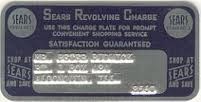
Our family loved Sears. Both Mom and Dad had charge plates (before the days of credit cards.) We bought our school clothes there, our dress clothes (such as they wore), our home tools
(Craftsman!), our home appliances (the Kenmore brand). We did our Christmas and birthday shopping there. We shopped Sears in Enid, Okla., where I grew up, and in the summer of 1956, when we moved to Hiram, Ohio, we shopped at the Sears at the recently opened Southgate Mall (Maple Heights, 1955). It was a Big Deal, getting to Southgate from Hiram in those days. But we did it--all the time. We drove from Hiram to Aurora, then to Solon, then to Maple Heights, to Southgate, which, at that time, was calling itself the largest shopping mall in the world. (I just checked that old route on GoogleMaps: 23.6 mi, 40 min, it says. It took longer with us: Dad was a leisurely driver.)

Here's an embarrassing Sears moment: I decided (9th grade, I think--1958-59) that it was time to buy my first razor. I didn't need one, mind you, but it was time that I did. (A number of my friends shaved--and needed to.) I had no facial hair whatsoever, but maybe I figured that the shaving would, you know, stimulate some growth there? So--off I went to Sears.  With Mom (not my first choice for such an errand).

We went to the men's counter (men's!), where, to my present shame, I claimed that I was buying a razor as a gift for someone else. At that time, Gillette was marketing three types of razors: Light, Medium, Heavy. I knew where I belonged (you get one guess). The conversation at the counter went something like this:
Clerk (a woman, of course--more humiliation): Which variety would you like--light, medium, or heavy?
Danny (to Mom): I think he needs a Light.
Mom (to Clerk--with a smile): He [smirk, smirk] needs a Light. 
Clerk: Light it is ...
Oh, was I embarrassed. But I got that razor home (Mom had also bought some shaving cream, the kind that "he" would probably like), and I went straight to the bathroom, shaved my face, then went to my parents' bathroom to find Dad's styptic pencil: I was bleeding.

Another weird story: My younger brother, Dave, and I (teens) were out at Sears on an errand with Dad. It was summer--and while we were outside, one of those terrific Ohio thunderstorms erupted--a vicious wind was blowing things all over the place. We were outside Sears, and the wind picked up something hard that smacked Dad right in the head and dropped him to his knees.

And Dave and I--to our eternal shame--fell down laughing. Dad, fortunately, was not all that hurt, and he most certainly did not see anything amusing about what had just happened. But Dave and I laughed all the way home. Then we had to turn around and go right back: Dad had lost his favorite pen from his shirt pocket when he hit his knees, so back we went to Southgate (an hour's drive!) to look for it. Dad found it. When Dad died in November 1999, both Dave and I considered relating that incident in our eulogies, but neither of us did. A simple reason: It made us look like the jerks we were.

When I got married (20 December 1969), Joyce and I continued to shop at Sears--the one out at Chapel Hill Mall near Akron. Clothes, cosmetics, gifts, tools, appliances; Sears even remodeled kitchens for us in two different houses.

And then ... gradually ... we stopped going there. I'm not sure why. Was it the emergence of those discount stores like Kmart and Clarkins? I think it was. (I just learned by the way the Sears and Kmart belong to the same company now.) We were living in Kent at the time, and Kent had both of those discount outlets--and Sears was a half-hour away. We stopped getting the catalogs, too.

And Sears faded from view.

I see on a Google map that there are three Sears stores in the vicinity--Solon, Akron (Chapel Hill Mall), Cleveland. I think I'm going to have to go take a look the next time I'm at Chapel Hill. Maybe wander the aisles ... see where they lead me ...

Friday, January 10, 2014

The Papers of Victoria Frankenstein, Part II: 41


“No. That’s the beauty of it. We’ll just decide on  what junk we want to leave in our fridges—and for how long—and then just, you know, record our findings.”
“Stop, you’re making me hungry.”

In the end, we picked about a dozen items. We would place them on uncovered plates in the fridge, then take pictures of them once a week until the science fair. Then we’d mount the pictures on some poster board, write some paragraphs about the spoilage rates of common food.  All done.
“Do you have a camera that would be good?” Gil had asked.
“Sure. Digital,” I said.
“You have a digital camera!” he said with much surprise.[i]
“Oh, uh, well, my father does,” I said. “You know, for the newspaper. And he, uh, you know, lets me use it … sometimes … when I need it.”
“I see.” Gil was looking at me … very, very strangely.

“So why were you looking at a story about Niagara Falls?” I asked Gil a little later as we were filling in the form that Mr. Gisborne required for our project.
“I wasn’t.”
I laughed. “Yes, you were.  I—”
“I said I wasn’t.” There was a no-nonsense tone in Gil’s voice this time. I looked over at him, but he was focused on filling in the form; he was not going to take his eyes from it.
After we finished, we sort of drifted apart in the library. I was looking at some materials Mrs. Bishop gave me on the history of the library building; Gil was back in the microfilm room.
I had already known that our Franconia library was one of the libraries that Andrew Carnegie had funded in the early years of the twentieth century. He was responsible for 1689 libraries across the country—more than 800 million dollars in today’s money. In Ohio alone there were 106 buildings.[ii]
I found a lot of other interesting things about the Franconia building—and about the Carnegie library program—and was sort of jotting them down absent-mindedly, but I was really thinking about Gil. He was turning into quite a mysterious young man. I turned a page in my notebook and began listing questions I had about Gil Bysshe:
• Who is his family? Why doesn’t he ever talk about them?
• Why is he doing research on my house?
• Why did he faint in the office?
• Why is he looking up things on Niagara Falls? And why doesn’t he want me to know it?
• Why does he seem to like me?
I paused, twirled my pencil a minute, then wrote:
• Why do I seem to like him?
I sat for a while, thinking about these questions, then decided to go talk to Gil about them. Well … maybe not the last two, but certainly the others.


[i] Remember—this is the fall of 1995. Such devices were not nearly so common.
[ii] All of this is true—but since there is no town named “Franconia” in Ohio, there is certainly no record of any Carnegie donation to that community.

Thursday, January 9, 2014

Get It While It's Hot!


The past few years, Joyce and I have slowly developed a new habit on cold winter evenings--specifically, Saturday evenings--more specifically, Saturday suppertimes. Steel-cut oats. We often buy them in bulk at Mustard Seed Market, filling a plastic bag from one of those dispensers that work with such efficiency that you can have a bag of oats as heavy as a bowling ball if you're not careful. Bob's Red Mill also produces it in cellophane bags. We can--and do--get them at our local grocery store.

On Saturdays, about noon, I put two cups of steel-cut oats and six cups of water (and a pinch of salt) in the CrockPot, set the device on Warm (not High, not Low), and by supper time (5-ish), the oats are perfect. In our bowls we mix in some other things. I like some walnuts and raisins and honey; Joyce prefers maple syrup to the honey--but likes the other additives. Hot, filling, nutritious ... all those good things. And we get to feel so virtuous afterwards--the way you feel after you work out--or read a classic novel--or see a Shakespeare play.

The other night we were talking about oats (why?), and we started reminiscing about the hot cereals we ate as kids. Joyce remembered eating Quaker Oats (Akron had been home to the mill--her ancestors had worked there), and I remembered a far more complicated story in our house. Each of the five of us (Mom-Dad-Dickie-Danny-Davi) had a different preference for hot cereal, which my dad would fix for us on cold mornings. But there was no way he was going to prepare four or five different breakfast cereals. So we alternated--at least until we got old enough to fix an alternative ourselves. I--lazy soul--did not really do this often, but Dickie did.

Dad's and Mom's favorite was Quaker Oats--so we had that the most often. I remember there was another product, too--Mother's Oats. I just this morning learned that it had begun as a separate product, but Quaker bought the company in 1911 and offered that product side by side with its own. Anyway, our toppings in those days of long ago were just sugar and milk. Dad, by the way, always called it UT-meal because he had heard someone say that years ago.


Dickie preferred Instant Ralston, a whole-wheat cereal that I didn't care for. To me, it tasted ... dusty? Like eating grass? And besides, if older brother Dickie liked it, then it had to suck, right? He would also stir in some wheat germ, which to me sounded as if he were inviting a infection of some sort. I mean, germs are bad, aren't they?

My favorite was Cream of Wheat--Dad called it "farina:--that white, pasty cereal that I haven't eaten in more than a half-century. I loaded it up with sugar and milk, though, and loved the stuff. I think I put brown sugar on it sometimes. I remember that it formed some kind of little crust on top when it cooled.

Davi liked (I think I remember?) both oatmeal and Cream of Wheat--though I don't think he cared for Instant Ralston, either.

There were other cereals that we tried. Maypo, for example, a maple-flavored oatmeal that was popular back in the mid-1950s. I loved their TV commercials. Here's one via YouTube: "I Want My Maypo!"

There was also something that Dad called "corn meal mush"--I think another name is "polenta." We didn't have it very often, but I kind of liked it--and now that I know what it is (and know that Bob's Red Mill makes it), I may have to give it a whirl (so to speak). Dad would also make cornmeal pancakes ("corncakes," we called them) sometimes--though he far preferred buckwheats. My grandfather Osborn had liked corncakes, and so did my uncle Ronald (Grandpa's son). Dickie still makes them now and then; I used to--but haven't done so for years.

Oh, by the way, Joyce and I never eat all the steel-cut oats in one sitting. I usually have the leftovers at a supper later in the week--so I get to feel virtuous twice during the week. And who can set a price on that?

Wednesday, January 8, 2014

The Papers of Victoria Frankenstein, Part II: 40


I crept right up behind him—he had no idea I was there!—and looked at the screen. I’m not sure what I expected to see there—my house again?—but I certainly was surprised when I saw the image he was staring at.
 “Niagara Falls!” I cried.
Gil squealed in alarm.
He whirled around in his seat, saw me, and slumped back down. “You’ve really got to stop doing that,” he said. “Sneaking up on me. One of these times—”
“I’m going to give you a heart attack? Shock you to death with surprise?”
“No. I’m not going to die of fright,” he said.
“You’re not? And how do you know that? I mean, how can you possibly know that? On the way home tonight—who knows?—you might see a monster … an alien. Something like that. And be frightened to death.”
Gil laughed half-heartedly. “All I meant was,” he said, “is that it’s not likely. There’s not too many scary things in Franconia, Ohio.”
“True.” I plopped down in a chair beside him. “So why are you looking at articles about Niagara Falls?”
Gil flipped off the light that illuminated the news story. “No reason, really,” he said.  “I’ve just always been interested in the falls.”
“Have you ever seen them?”
“No. But we’re not that far away from them here, are we?”
“A few hundred miles,” I said. “People from here go all the time.”
“Have you seen them?”
“No … not yet. But I’ve always wanted to go, too.” I paused a minute. “And I just read a book about the falls.”
“Oh yeah? Which one?”
“Pierre Berton’s Niagara.”
“That’s a good one.”
I couldn’t control quickly enough my look of surprise, and Gil picked up on it immediately. “What, you think you’re the only one who can read a book?”
“No, of course not. It’s just that, you know, there are so many books—and the chances of any two people reading the same one …”
“That was actually a pretty good try,” Gil smiled. “Amazing how quickly you can lie.”
“It’s a gift,” I said.
We sat in silence for a few breaths. “So,” I said, “are you ready to plan our science fair project?”
“Can’t wait!”
We moved over to one of the circular tables in the room so we could spread out our materials.
“Any ideas?” he asked.
“One,” I lied. I had hundreds of ideas, but I was not about to waste them on a stupid school science fair.
“Well, what is it?”
“I have a name for it,” I said. “See if you can guess what it is from the name.”
“I’m not good at guessing things,” Gil complained mildly.
“Just try,” I said. His shrug told me he was willing. “Here goes,” I said. “Pay close attention.” I paused dramatically. “The title of our proposed science fair project is … Fridge Goop.”
“Fridge Goop?”
“Fridge Goop.”
“You mean, like junk left in the fridge too long?”
“Right.”
“That’s gross.”
“Yeah, really gross.”
“I love it. We don’t have to do much of anything for that, do we?”
“No. That’s the beauty of it. We’ll just decided on what junk we want to leave in our fridges—and for how long—and then just, you know, record our findings.”
          “Stop, you’re making me hungry.”