Dawn Reader

Dawn Reader
from Open Door Coffee Co.; Hudson, OH; Oct. 26, 2016

Thursday, December 12, 2019

No Post Today--but I Have an Excuse

just out of the oven

I wrote no blog post--busy man:
Today was sconery from Dan.

Some whole wheat, white--a bit of oat.
(You eat too many? You will bloat!)

Some apricots--some walnuts, too.
(They're all for me, and none for you!)

I eat one every morning, see?
They last about a week for me.

Sometimes dear Joyce will beg for one--
I yield--as I have always done.

(Maintaining love and harmony--
It's worked for half a century!)

I have no post to share, and so
You'll have to count this "poem," Yo!

Wednesday, December 11, 2019

Lesson Learned--Slowly


As those who occasionally visit this site probably know, I have been (slowly) working my way through the complete novels of Wilkie Collins (1824-1889). Probably best known for The Woman in White (1860) and The Moonstone (1868), Collins was very popular during his heyday*--friend and collaborator with Charles Dickens, etc. I've got about four of his novels remaining (I'm reading them in the order of publication).

Currently, I'm reading The Black Robe (1881), a novel about a troubled young man, a new marriage, and some disturbing moves by some Roman Catholic authorities (Collins apparently had some ... issues).

Anyway, last night I was reading about the recent marriage of Louis Romayne to Stella, a young woman with a past she's struggling to conceal. A young priest is helping Romayne with his research and writing--and also trying to convert him (for reasons I'll write about when I finish the book). The young priest, sensing some tension in the new marriage, gives this advice to Romayne:


"Don’t be impatient with her! Put away from you that besetting temptation to speak in irony—it is so easy to take that tone, and sometimes so cruel" (146 in Pocket Classics edition--see pic at top of this post).


The truth of that comment hit me in various ways--but it mostly reminded me of a discovery I made about my relationship with students when I first began my teaching career--seventh grade "language arts" back in the fall of 1966. The lesson was this: Don't be ironic or sarcastic with them.

I'd like to say I discovered this right away (I didn't); I would like to say that once I discovered it, I never did it again (oops!); I would like to say that I am never that way now (hah!).

Yes, early in my career I used irony and sarcasm like weapons. I didn't seem to remember how I'd felt when adults had used that technique on me--how it had made me feel diminished, powerless, angry.

No, I didn't remember that. I just used it like a cat o' nine tails to lash those young students (they were just twelve, for pity's sake!) who were simply trying to figure out how to get along in my class. I wish I could remember some specific examples (actually, I'm kind of glad I can't); suffice it to say: At times I was, as the priest says in the Collins' novel, "so cruel."

As I indicated earlier, I did not entirely lose the impulse to lash out, even near the very end of my career in 2011.

I was teaching those final years part-time at Western Reserve Academy (a grades 9-12 prep school), just a couple of blocks from our house. In good weather I would ride my bicycle--and I wore a helmet.

One morning, arriving at school, as I was dismounting from my bike, a young wag gave me some harmless grief about wearing a helmet. And I--forgetting all I'd learned (or thought I'd learned)--whipped out these words: "Well, I like my brain," I said. "If I had yours, I probably wouldn't bother to wear a helmet."

Ha, ha.

The young man looked as if he'd been punched. And he had. By one of his teachers. I felt terrible--then and later. I like to think that I apologized to him, but I'm not sure I did.

And here's the thing: Those words made me feel diminished, too. As they should have. Once again, I realized I was less than I'd thought I'd been.

Early in my marriage--nearly fifty years ago now--I learned (and quickly so) to keep sarcasm and harsh irony chained up in the back yard. Why would I want to make the woman I love feel bad? (Unfortunately, the creature escaped from the back yard now and then, charged into the house, bit my lover, snarled at the "man" who hadn't chained him securely, a "man," who, by then, was snarling at himself as he returned the thoughtless creature to his chains.)

We live. We learn. But sometimes--at least in my case--we don't learn fast enough--or thoroughly enough. And Regret becomes a common companion.


*a word "of uncertain origin" says The Oxford English Dictionary

cat o' 9 tails
(and you can buy them online! yikes!)

Tuesday, December 10, 2019

Reading Joyce Carol Oates


I'm about to finish Joyce Carol Oates' most recent novel--My Life as a Rat (2019)--and, as usual when I read her, I'm stunned. And stunned is not too strong a word. (I will be posting about this book in Sunday Sundries this week, so I won't say much about it here.)

Let's back up.

I began reading Oates back in the late 1960s when her novel them was, well, stunning everyone. (In fact, it would win the 1970 National Book Award for Fiction.) And throughout her long, incredibly productive career she has won numerous other awards. But the one I'm waiting for? The Nobel Prize. She has earned it. Fiction (sometimes under a pseudonym), nonfiction, drama, poetry--all of this (and more!) she writes.

I've not read it all. She is so productive (as I said) that she reminds me of, oh, Anthony Trollope or Charles Dickens with a word-processor. Trollope (1815-82) wrote forty-seven novels--and there would have been a lot more if he had not been forced to write them all by hand.

I think I've read all of her novels--there are about fifty of them. Quite a few of her collections of short fiction--there are more than forty of them. (I especially enjoyed Wild Nights!--the title is from the Emily Dickinson poem (link to it)--a collection of highly imaginative stories based on the lives of actual writers.)

When I was reviewing books for the Cleveland Plain Dealer, I got to review a couple of Oates' books (Wild Nights!--2008--and Daddy Love--2013). (I still review for Kirkus Reviews--but nonfiction only.)

And among the things that astonish me about her?

  • How she--with such apparent ease--enters the minds and hearts of such a wide diversity of characters--from all walks of life. Many are seriously damaged by their lives, but, somehow, they persevere, sometimes in a staggering, stumbling way.
  • Her profound ability to make you care about her characters--even those whose deeds don't always make them all that admirable.
  • Her fluid, engaging, pellucid prose.
  • Her absolute mastery of a wide variety of narrative techniques.
  • Her ... well ... just about anything she does on the page!
She taught at Princeton University for a long time--is now retired ... sort of: She still teaches a course now and then. And (though I'm veering close to cliche now, I know) her writing continues to be one of my most valuable instructors. I learn something on every page--something technical, something human, something surprising, something unique, something ...

Joyce Carol Oates is now 81 years old, but you would have no hint of that on her recent pages, pages that continue to crackle with the electricity of intelligence, imagination, and creative energy.

She is a wonder. And her books are wonder-full.

our shelves of Oates' books


Monday, December 9, 2019

Sunday Sundries, 254


I know: A day late. Deal with it!

1: AsOTW: People who share on Facebook (and other platforms) some memes (from Right or Left) whose veracity they have not bothered to check. Misinformation is a virus—a deadly one in a democracy. Just because we agree with something does not make it true.

2. I finished one book last week—Anne Tyler’s 2018 novel, Clock Dance, a novel I really enjoyed—and admired.


The novel is the story of Willa Drake at various times in her life (she's eleven when the novel begins--but it hops around). She gets older--marries (unwisely)--has a son, Sean. She feels, afterward, unattached. Her son grows up and moves away and doesn't seem to give a damn.

Then ... she gets a call from Baltimore. A former GF of Sean (Denise) has been shot in the leg and needs help at home--and with her daughter. Willa's second husband (also a mismatch) reluctantly goes with her--but doesn't stay long.

Willa ends up becoming very involved with Denise, her daughter, the neighborhood--and she stays and stays and stays--beyond the time she's really needed. In a way, she's found a new family.

Lots of things occur in Baltimore, but I'll leave it to you to discover what they are.

But the message here: an overpowering need for family. Most of us have felt it; I know that I have ...

3. On Saturday night, Joyce and I went to the first film we’ve seen since late October! The reason we’ve not gone out? Something about the post-equinox early darkness that has made us both prefer to stay indoors after supper—at home—and read and stream bits of shows we like. Comforting. And in my, uh, “advancing years” I find I often just plain don’t have the energy to do much in the evening hours. Yet another tribute to the Glories of Aging.


But … our son and his family gave us a generous gift card to Regal Cinemas for my birthday back in mid-November, and since there is a Regal Cinema only about two miles from our house, we decided to head out to see the Tom Hanks film about Mr. Rogers—Beautiful Day in the Neighborhood.

When our son was a wee lad, he had tolerated rather than liked Mr. Rogers. I’m not sure why. He loved Sesame Street and would eagerly watch it—but not Mr. Rogers. I kind of liked Mr. Rogers, and one of the things I especially liked: He was not far more skilled in some things than a child is. His drawings and handicraft things would not often surpass what his young audience members could accomplish. I liked that. Kids can relate to adult incompetence! (A scene in the film actually deals with this point.)

And I also remembered, watching the film, that one of my former Harmon Middle School students had later gone to Pittsburgh to work for Fred Rogers.

Anyway, the film. Really liked it—though it wasn’t what I expected. It was more or less a film about a relationship between Mr. Rogers and a journalist (a somewhat tormented man) who was interviewing him for a profile for Esquire magazine (this profile actually ran in the magazine).

But it’s through this relationship that we see how Mr. Rogers interacted with people—of all ages. And we also see the profound authenticity of the man.

Tom Hanks, by the way, did a great job; soon, both Joyce and I forgot he even was Tom Hanks.

One of the technical aspects of the film I really liked: When they changed locations (say, Pittsburgh to NYC), they would do so via fabricated scenery that looked lifted from Mister Rogers’ Neighborhood. It was initially surprising, then oddly moving.

The arc of the plot will not really surprise anyone who watched the old TV show, but both Joyce and I still found it very affecting—and there is a scene in a NY subway car that will dampen every human eye that encounters it.


4. We finished streaming the first season of Fleabag on Amazon Prime. It was touch-and-go for a while: Would we keep watching? (Or would it gross us out?)


Gradually, gradually, both of us got hooked. The more we got to know the characters—and there are some oddballs in the episodes—the more we looked forward to our ten-minutes-or-so-a-night. Phoebe Waller-Bridge (a talented performer who plays the character known as Fleabag) also is the writer of the series, and the first season leads us through some dark emotional, deeply subterranean caverns—as well as offers some very funny moments and encounters.

It’s the story of a young woman in London, a young woman who’s recently lost a dear friend and who seems … unmoored. She steals, sleeps with about anyone who’s interested, runs with a total lack of interest the café she operated with her late friend, dangles like a marionette a young man who loves her, maintains a mostly fractured relationship with her family (including her sister—a great character).

One of the techniques we like—and it’s not, of course, original to this show—is how “Fleabag” turns now and then to the camera to address us—to say something or show us something that the other characters don’t see or hear. It’s one way to remind us that this is all a story.

Anyway, I occasionally find myself surprised by what I find myself liking. Fleabag is now one of them.

Link to video.                                                                                                                                                                                                                                                                                                         
5. The main reason I didn’t write-and-post this on Sunday: I was too worn out to write it. I’d devoted a chunk of the day, you see, to preparing and baking the Christmas tree bread that I’ve been making for, well, for decades. My mother had occasionally baked them for us when I was a kid—not the same recipe I use, of course. She did not use sourdough back in the day—although I did give her some starter back in the early 1990s, but she quickly tired of the substance’s insistence that she use it at least once a week.

Anyway, I loved her tree bread, and, after I married, I decided to give it a whirl myself. Made it with regular yeast for years; then after the summer of 1986 (when I acquired my starter) I began doing it with sourdough. The recipe has evolved over the years.

Basically, it’s just a sweet bread—honey, butter, salt, sourdough, flour, candied fruit, sliced dried apricots, some slivered almonds. I form “ropes” of the risen dough into the shape of a tree—kind of.

Since I make it only once a year, I’m always ... concerned ... about the outcome. And, to be honest, some years it’s better than others. (Which is a kind way of saying that it sometimes sucks.)

Anyway, yesterday’s batch looks good; we’ll find out on Christmas morning after I’ve iced (powdered sugar + water) and decorated it (candied fruit scattered across the top of the icing) if its taste matches its looks. (Meanwhile, it lives in the freezer.)

I bake three of them each year—all in one mega-batch: one large, two smaller. The large one I mail to my brothers in Massachusetts; one smaller one I keep for ourselves; the other I give to our son’s family.

And yesterday, as I said, just wore me out. Kicked my butt. So much so that I’m not sure I’ll be doing it again: I spent much of the day on my back, trying to recover. Really. So ... to make long story short ... no Sunday Sundries yesterday.


6. Last Word—a word I liked this week from one of my various online word-of-the-day providers:

     - from wordsmith.org

inquiline (IN-kwuh-lyn)
noun: An animal living in the nest, burrow, or home of another.
ETYMOLOGY: From Latin inquilinus (tenant, lodger), from in- (into) + colere (to dwell). Earliest documented use: 1640.
USAGE: “That he has never allowed himself to be absorbed fully into the English tradition is something many critics have misunderstood. Naipaul is best understood as an inquiline, as a man whom the English have tried to absorb, but a man who has clung to displacement like a floating buoy.”
“The Voyage in -- A Way in the World,” by V.S. Naipaul; The New Republic (Washington, DC); Jun 13, 1994.

“In ‘Talent’ a young English girl worms her way into the life of a Fifth Avenue extended family with theatrical and musical connections. Since they are dysfunctional, and don’t communicate with each other, they are unaware of what exactly the girl, Ellie, is up to. So when this inert inquiline turns up repeatedly at one of the family houses and sits in silence, nobody asks her to depart.”
Patrick French; “East Is West; Financial Times (London, UK); Oct 1, 2011.


Saturday, December 7, 2019

Standing There


Today is the birthday of Willa Cather (1873-1947), and this morning on Facebook I posted some images of places where she was born, where she lived, where she now lies in a New Hampshire cemetery.

Actually, I reposted those images, and I didn't add anything new this year. But I got to thinking, later in the morning, about how--somewhere along the way--I began going to see places relevant to the writers I was teaching.

I have written about this in other places (including this blog), so I'm not going to rehearse it all here, so the Willa Cather example will do.

In 2005 I was teaching junior English at Western Reserve Academy, and the teachers agreed that year to assign (for the beloved "summer reading") Cather's 1918 novel, My Ántonia, one of her novels set in Nebraska, where she had grown up.

I hadn't read much Cather prior to that, and I don't like teaching things I don't know much about--an attitude I developed my first few years of my career when I didn't know too much about too many things. Enough to get by--not enough to be, well, very competent.

So during that summer 2005 I read all of Cather's novels (via, mostly, the Library of America editions), and Joyce and I embarked on a number of road trips to see the places where she'd lived. And so we went to Back Creek, Virginia (her birthplace--the house--not looking too healthy--is still standing); to Red Cloud, Nebraska (and environs), where she set so much of her fiction (the Cather home still stands and is now a museum); to Grand Manan Island (in New Brunswick), where she spent summers, writing; to Pittsburgh, Pennsylvania, where, before her writing career commenced, she taught high school English for a while (both still standing are the school where she taught and the house where she rented an attic room); and to Jaffrey, New Hampshire, where she lies, sharing a grave with the woman she loved, Edith Lewis.


outside Cather girlhood home--Red Cloud, Neb.

the Cather home in Red Cloud, Neb.

near Red Cloud, Neb.
Cather birthplace near Back Creek, Va.
Cather cottage on Grand Manan Island
We took countless photographs, of course, which I shoved into a PowerPoint and used with my students that fall when we were doing our summer-reading thing.

While we were in Nebraska, it was nearly time to harvest the corn (fields were everywhere), and, following directions we obtained in Red Cloud, we were driving on small country roads lined with cornfields. The plants were huge.

And we got lost. We couldn't see a damn thing but dirt road and corn.

Fortunately, the roads were laid out on kind of a grid, so I knew that if I turned right at the next opportunity, we would end up back on the highway.

And so we did. But I confess to having some Stephen-Kingly worries while we were concealed by corn.

Anyway, Joyce and I have done this sort of thing with many writers--from Melville to Hemingway to Fitzgerald to Zora Neale Hurston to ... on and on and on.

I have learned--by doing this sort of thing--that there is just ... something ... about standing on the ground where once stood the literary figure I'm pursuing. Of course things do not look the same; that's where imagination takes over. You stand by Sunnyside, the home of Washington Irving near Tarrytown, New York, and you hear--you are sure you hear--the pounding hoofbeats of the horses of Ichabod Crane and the Headless Horseman.

It's hard to believe that Willa Cather and I were alive at the same time (I was born in 1944--we shared the earth for about three years). But having visited so many of the sites, I feel I know her a little better than I otherwise would--that I see her stories better than I otherwise would--that I feel her stories better than I otherwise would--that I ...


Thursday, December 5, 2019

Scone Pan Redux

old, fractured pan

I broke the last one--as you know.
I bought a new one--not for show.

And FedEx brought it here today--
So I have used it, right away.

I made some maple scones just now--
With maple syrup (yow! and wow!).

The pan, of course: a perfect twin
For its broke brother (in the bin).

The scones look great--I'll eat them fast,
For homemade scones don't ever last

Too long.

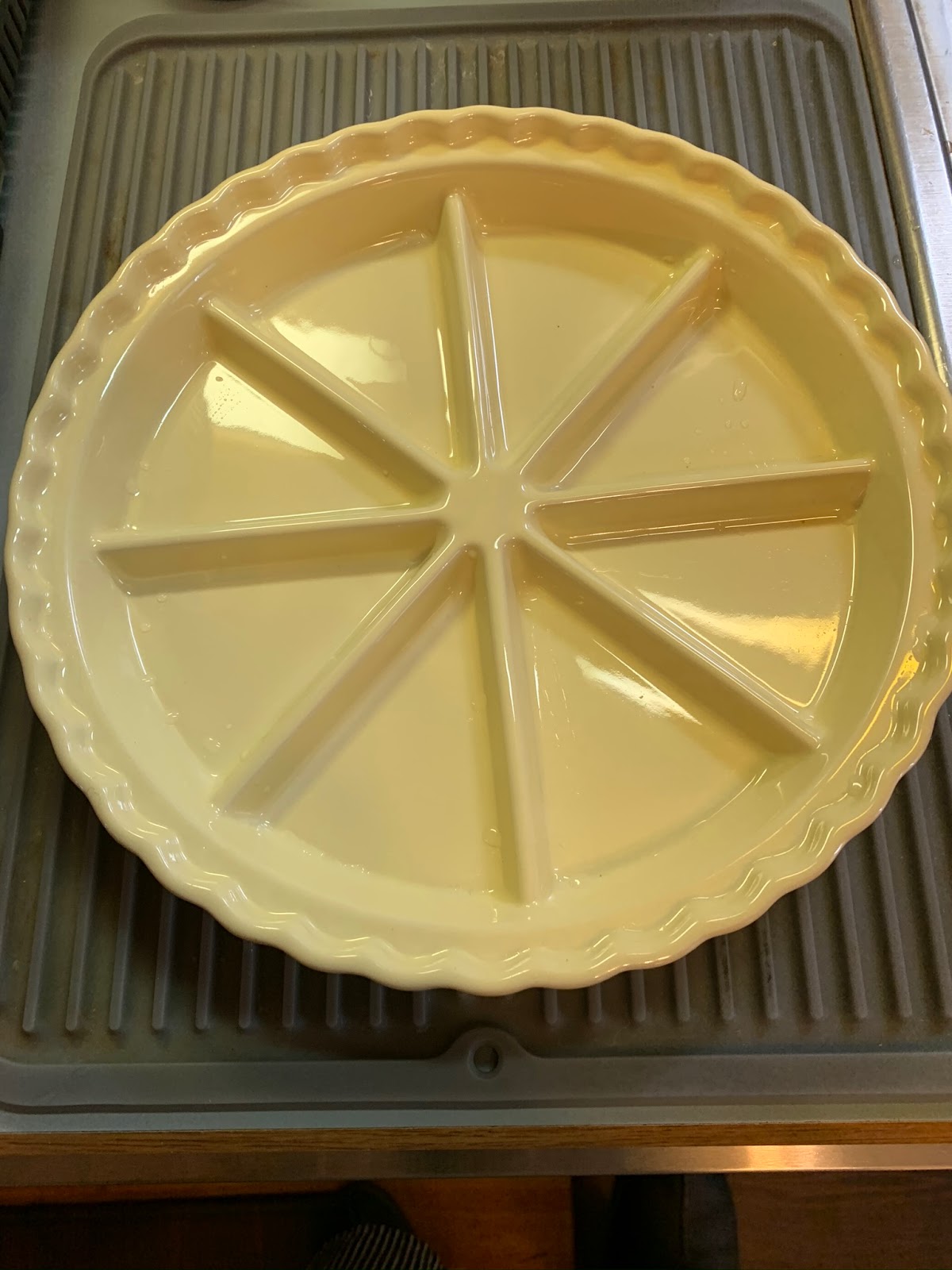
new pan

scones in new pan

Wednesday, December 4, 2019

Obsessive


I'm kind of ... obsessive. (I prefer that word to, oh, anal or OCD: It sounds more ... gentle?) My mother would have laughed had she lived to read that first sentence, for she (and Dad) spent lots of time in my childhood and adolescence "suggesting" that I make my bed, clean my room, do my laundry, etc.

And I should quickly say that I'm not obsessive about keeping things all that neat. One look around my study would quickly confirm that. Or my closet. Or the area around our bed (my side of it, that is).

But here are some things I am rather obsessive about.

  • Reading an author's complete works. I like to blame my former Hiram College English professor Dr. Abe Ravitz for this. When he would begin teaching us about a novel--say, Frank Norris' McTeague--he would tell us about Norris' other works. The implication, for me? You gotta read these other books or you really don't know what you're talking about, do you?
    • And so, over the years, I've read all of Dickens, Trollope, Thackeray, Poe, Jack London, Kate Atkinson, Elizabeth Strout, Robert B. Parker, Michael Connelly, and on and on and on. (As you can tell, I read not just all things by "literary" writers but by just about anyone else I start reading.)
    • One source of frustration: Joyce Carol Oates. I am currently reading her new novel (My Life as a Rat, 2019), but I have not read all her collections of stories--her plays--her poems. I just don't have the time--not if I want to read anyone else. I greatly admire her--believe she should have won/should win the Nobel Prize--but she reminds me of what, oh, Dickens or Trollope would have accomplished if they'd had a word-processor.
  • Doing household tasks on the same day, in the same way--from unloading the dishwasher first thing in the morning, to baking bread on Sundays, to putting my pj's in the wash on Friday mornings, to ... You see?
  • Other quotidian routines ...
    • arriving at the coffee shop about 6:45 a.m., sitting in the same chair (which, thankfully, the baristas save for me)--and about 12:20 p.m. for my afternoon stint
    • reading my daily quota for the book I'm reviewing for Kirkus--1st thing in the morning at the coffee shop
    • heading out to the health club (when my Nap Desire doesn't trump my good sense) about 1:45 p.m.
      • doing the same thing out there every day: 300 cal on the exercise bike (and, yes, I'm annoyed when someone else is on "my" bike), walking a mile of laps, 250 pulls on the rowing machine, doing some sets of curls with some hand weights
    • having lunch at 11:45 a.m.; having dinner at 5; having salmon on Tuesday; having an omelet on Sunday
  • Memorizing poems. I started doing it back in the 80s with my middle school students (I learned the poems I asked them to learn--"Stopping by Woods on a Snowy Evening," a Shakespeare sonnet, etc.). Then, a little bored with only those things in my head, I began learning more and more on my own. Fifty, 100, 150, 200. I'm now at 230, and I hardly have time during the week to rehearse them all, though I do ...
    • some in the shower
    • some as I dress
    • some as I walk back and forth from the coffee shop
    • some at the coffee shop (silently, silently)
    • some while I'm exercising (silently, silently)
    • some in the health club shower (appropriately, one of those is "Casey at the Bat")
I could go on--but I have a feeling I'd better stop before someone calls 911--and the fact that Joyce hasn't called that number after fifty years of living with me is the definition, my friends, of Love.